The beauty of being human in the age of AI
“I saw the angel in the marble and carved until I set him free.”
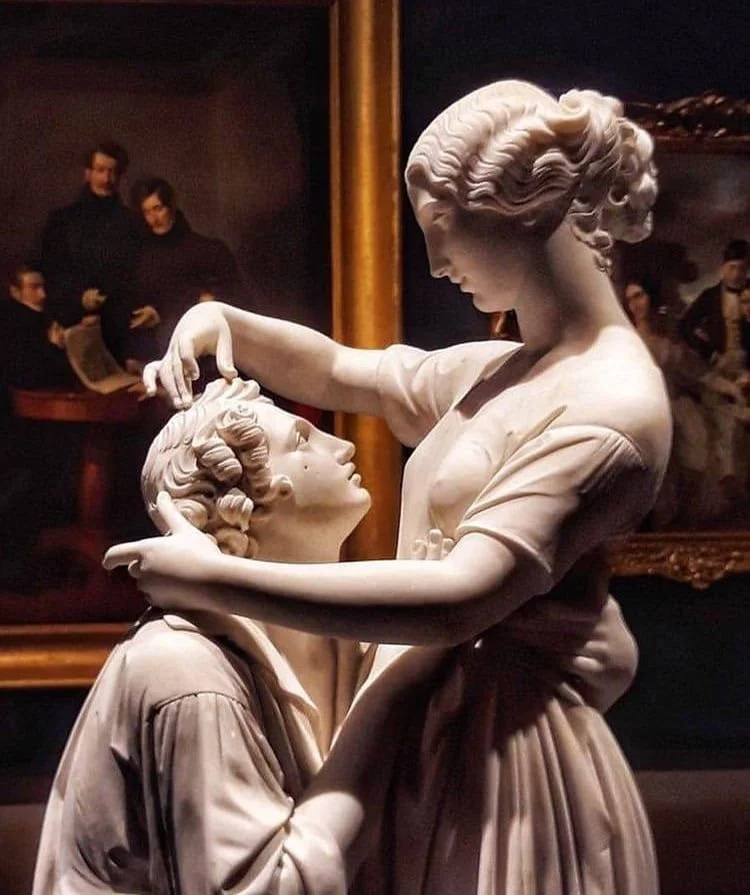
Do you remember the last thing that took your breath away? For me, it’s always the beauty of a marble statue. The way the fabric falls, the veins on a hand look plump with blood. A pillow, so invitingly soft that you could almost lay your head down and slip into a midsummer night’s dream.
I love the care and attention these works exude. There is depth. There is skill and mastery.
Like many others, Michelangelo devoted years of his life to creating his marble works of art. He studied human anatomy, ensuring that he captured every little detail correctly.
600 years later, and we have lost the pursuit of brilliance. We’re abandoning the deep work of the inner life to efficiency and speed. We’re choosing mundanity over mastery, the lifeless over life-giving.
Don’t misunderstand me. This is not an essay lambasting AI or bemoaning technology. Like many things, they are very worthy tools.
But follow them blindly at your own peril.
Without depth, there is an erosion of the interior life
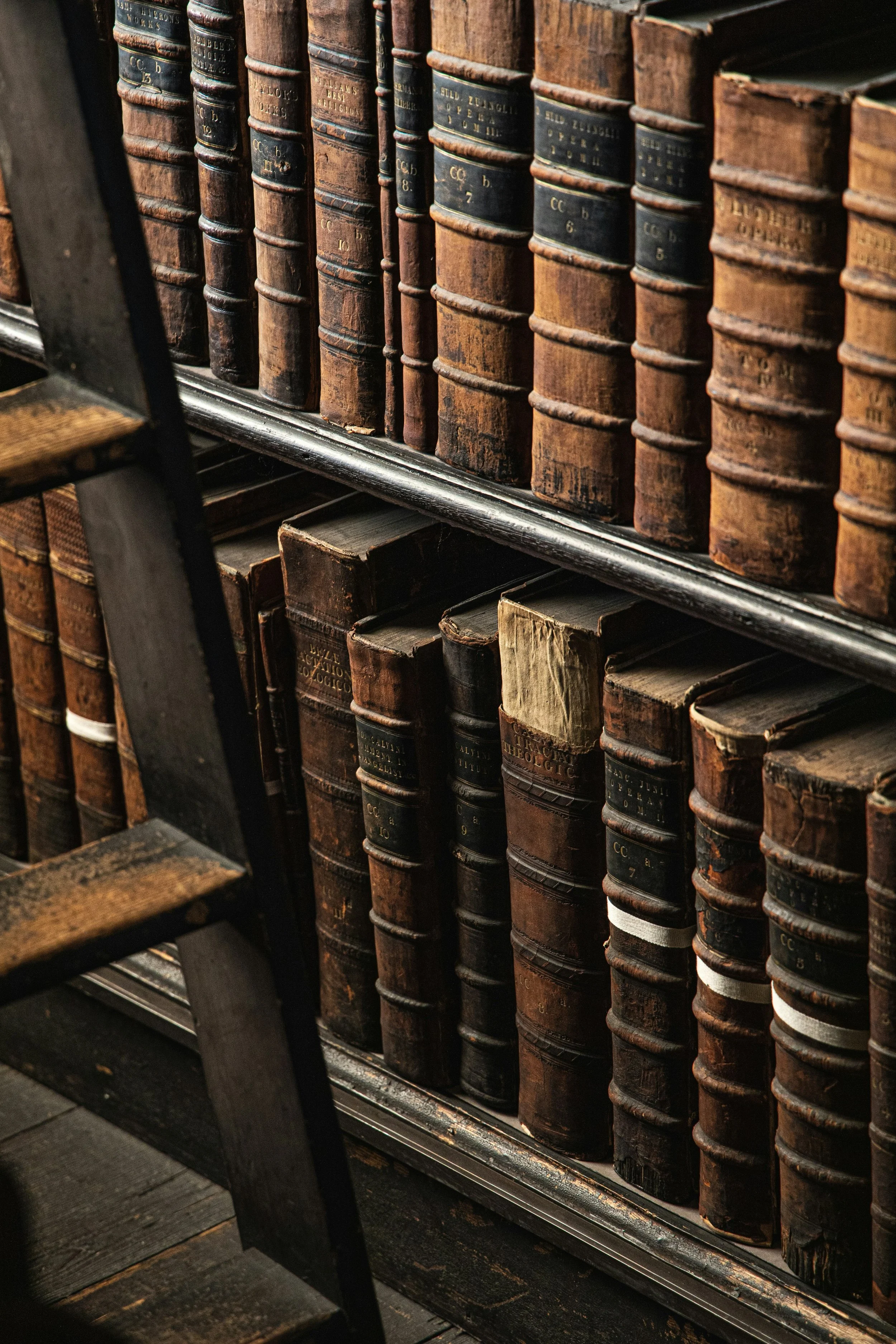
The average attention span is around 40 seconds before people lose focus or switch tasks.
When we lose the ability to focus, we lose access to depth. Psychologists have long argued that attention is the gateway to meaning: what we attend to becomes our inner world.
Chronic inattention fragments thought, weakens memory, and makes it harder to regulate emotion, leaving us more reactive and less able to sit with complexity. Without sustained attention, we struggle to enter states of absorption — the conditions under which creativity, fulfilment, and a sense of aliveness emerge.
The cost of inattention, then, isn’t just distraction; it’s an erosion of our interior life. Our inner landscape. AI offers extraordinary convenience, but it removes the opportunity to go deeper. No longer do we need to pull out a dictionary or pour over a thesaurus. We can just “whack it through Chat GPT”, and it will spew out something ‘good enough.’
To reflect, to wrestle with language, and to arrive at our own meaning.
Our brains crave the messy human elements

Craft demonstrations from students at The Kings Foundation. Photographed by Kate Cullen.
For centuries, craft was learned slowly, through apprenticeship. Apprentices once studied under masters for five, seven, or sometimes ten years. They learnt both technique and judgment, and the delicate interplay between maker and material.
Today, designers still train in much the same way. They study proportion, hierarchy, colour, typography, composition and key design principles. Tastes are developed through repetition, experimentation and failures.
Yet AI now shortcuts this very human process, producing work that follows the rules without understanding them, and without the intuition required to bend or break those rules meaningfully. To the undiscerning eye, the result often looks fine. Possibly even good.
But something essential is missing. Without the human attention that shapes taste and intention, the work is functional, but it’s flat. Devoid of meaning. It lacks the human hand, eye and heart that give it depth and richness.
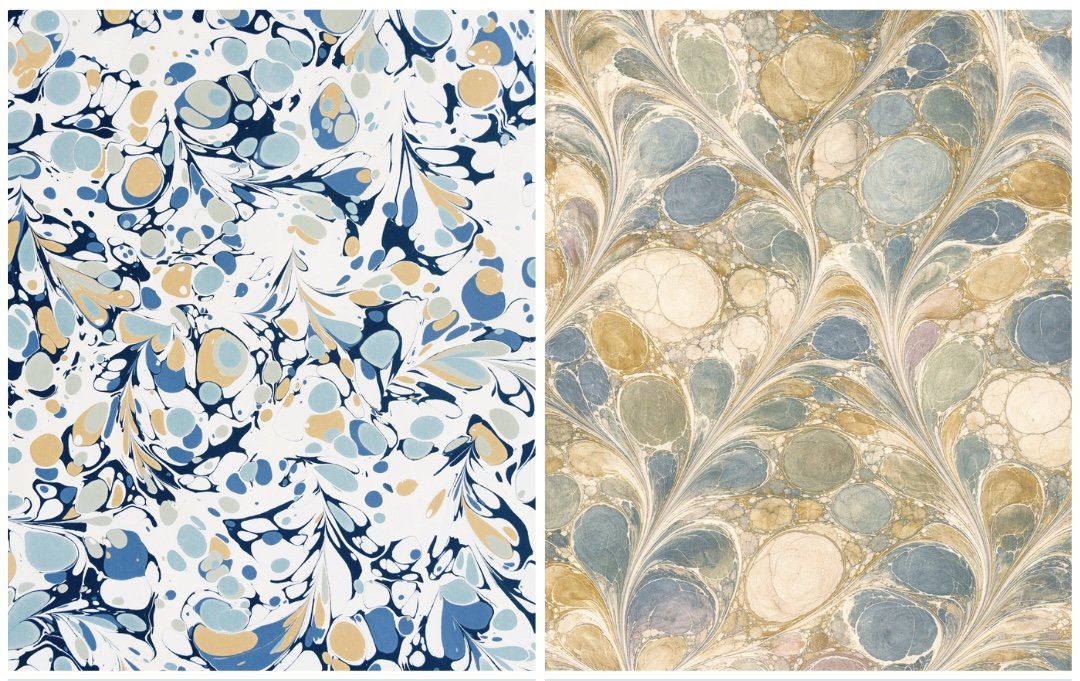
I want you to compare the two above images. The one on the left is a hand-marbled paper, created by the wonderful Florence at Inq. exclusively for my brand. On the right is an AI-produced pattern. Florence’s design (left) has movement, life. Some splotches are bigger than others. The AI design (right) is too smooth, too balanced. It’s dull and flat - even though I gave it the exact same prompt I gave Florence. It lacks the subtle irregularity that piques curiosity and asks us to lean in.
We’re wired to respond to signs of the human hand. In one study, participants were asked to choose between a perfectly round cookie and a crude, rough-edged cookie. 66% choose the misshappen cookie because it felt…well…more real.
It’s these small, imperfect traces of humanity that continue to give work its meaning. A small sign that says, “I am here. You are here. Together, we are not alone.”
The scent of memory and the experience of living
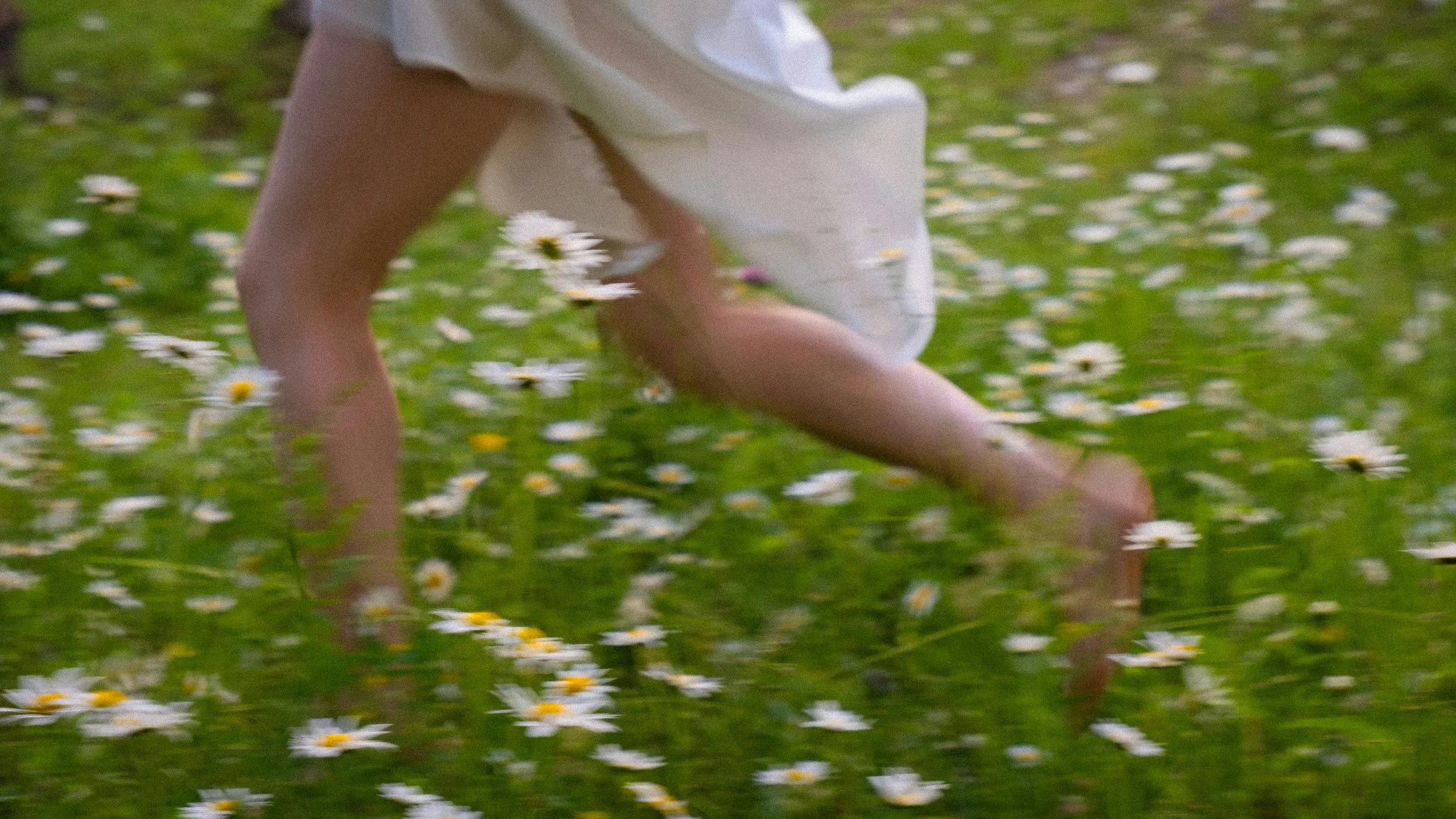
Not only is AI filtering into every crevice of our digital worlds, but it’s also eking into our real-world experience, too. And it’s coming for our memories.
The Anemoia Device is a scent-memory machine that can transform a photograph into a custom fragrance. In essence, it turns a visual memory into smell. It robs us of I don’t know about you, but that deeply, deeply unsettles me.
Science shows that smell is the sense most closely linked to memory. It’s processed in the brain’s emotional and memory centres, meaning it has a unique ability to trigger vivid memories far faster and more powerfully than any other sense.
Sea salt on Cornish stone. An old lover’s cologne. The way Ireland smells after rain. Baby-powder on your newborn’s head as you pull them close during those long, night watches.
All of these moments and memories outsourced to a machine.
Generative AI telling us what memory smells like. That is a step too far. We cannot stop the march of technology, but we can choose where it belongs. We can decide which parts of life remain human.